
Published: January 17, 2026
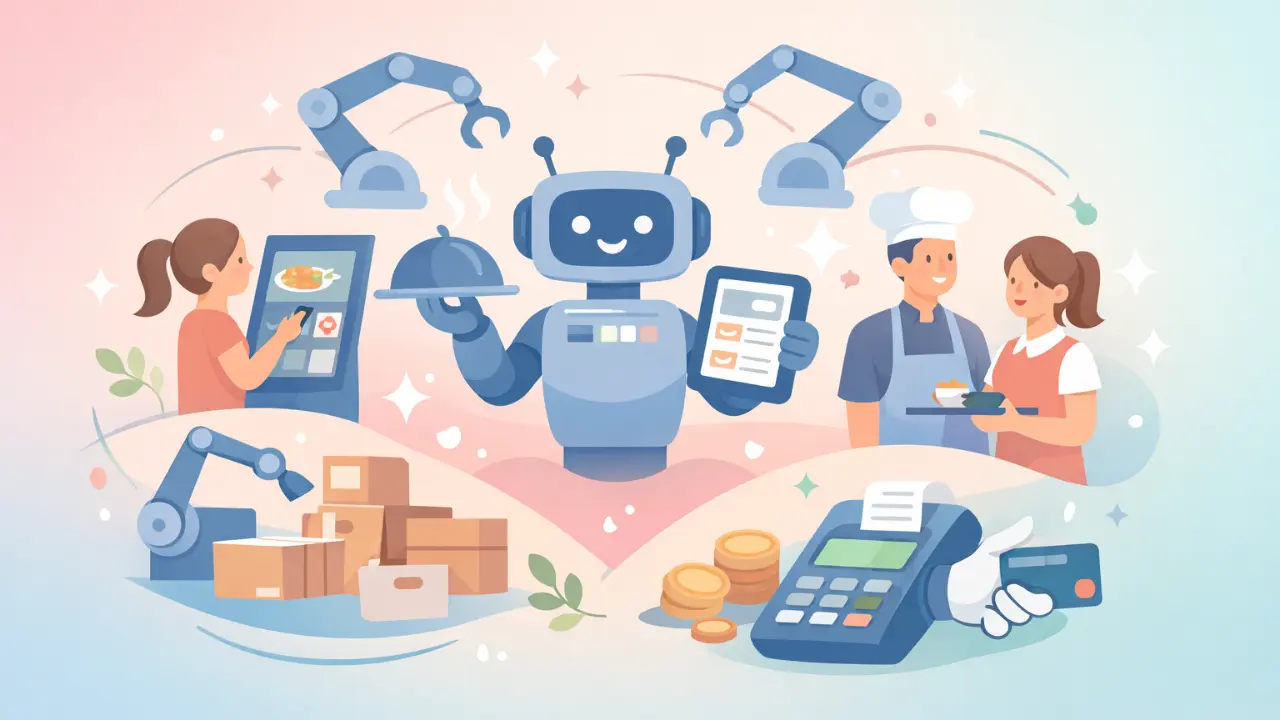
Artificial intelligence is revolutionizing the restaurant industry in 2026. From AI-powered ordering systems that predict customer preferences to intelligent inventory management that reduces waste, AI is transforming every aspect of restaurant operations. Restaurants that embrace AI technology are seeing increased efficiency, reduced costs, improved customer experiences, and higher profitability.
This comprehensive guide explores how AI is changing restaurants in four critical areas: ordering systems, inventory management, staffing, and billing. You'll learn about the latest AI technologies, their practical applications, benefits, challenges, and how to implement AI solutions in your restaurant to stay competitive in 2026.
Table of Contents
- Introduction: The AI Revolution in Restaurants
- 1. AI-Powered Ordering Systems
- 2. AI-Driven Inventory Management
- 3. AI for Staffing and Workforce Management
- 4. AI-Powered Billing and Financial Management
- 5. Integrating AI Solutions
- 6. Challenges and Considerations
- 7. The Future of AI in Restaurants
- 8. Getting Started with AI
- Frequently Asked Questions
- Conclusion
Introduction: The AI Revolution in Restaurants
In 2026, artificial intelligence is no longer a futuristic concept—it's a reality transforming restaurants worldwide. AI technology is helping restaurants operate more efficiently, serve customers better, reduce waste, and increase profitability. From voice-activated ordering to predictive inventory management, AI is revolutionizing every aspect of restaurant operations.
Why AI matters for restaurants:
- Efficiency: AI automates repetitive tasks, freeing staff to focus on customer service
- Cost Reduction: Intelligent systems reduce waste, optimize inventory, and improve labor scheduling
- Customer Experience: Personalized recommendations, faster service, and seamless ordering
- Data-Driven Decisions: AI analyzes vast amounts of data to provide actionable insights
- Competitive Advantage: Early AI adopters are gaining market share and improving profitability
- Scalability: AI solutions help restaurants grow without proportional increases in costs
This guide focuses on four critical areas where AI is making the biggest impact:
- Ordering: AI-powered systems that personalize customer experiences and streamline order processing
- Inventory: Intelligent systems that predict demand, reduce waste, and optimize stock levels
- Staffing: AI-driven workforce management that optimizes schedules and improves employee satisfaction
- Billing: Automated billing systems that reduce errors and speed up payment processing
1. AI-Powered Ordering Systems
AI-powered ordering systems are revolutionizing how customers interact with restaurants. These systems use machine learning, natural language processing, and predictive analytics to create personalized, efficient ordering experiences.
1.1 Voice-Activated Ordering
Voice-activated ordering systems allow customers to place orders using natural language. AI processes voice commands, understands context, and confirms orders accurately.
Features:
- Natural language understanding for conversational ordering
- Multi-language support for diverse customer bases
- Voice recognition that adapts to accents and speech patterns
- Order confirmation and modification through voice commands
- Integration with drive-through and phone ordering systems
Benefits:
- Faster order processing (reduces average order time by 30-40%)
- Improved accuracy (reduces order errors by up to 90%)
- Better customer experience (contactless, convenient ordering)
- Reduced labor costs (less staff needed for order taking)
1.2 AI Chatbots and Virtual Assistants
AI chatbots handle customer inquiries, take orders, answer questions about menu items, and provide recommendations 24/7 through websites, mobile apps, and messaging platforms.
Capabilities:
- 24/7 customer service without human intervention
- Personalized menu recommendations based on order history
- Allergen and dietary preference management
- Order tracking and status updates
- Upselling and cross-selling suggestions
1.3 Predictive Ordering and Recommendations
AI analyzes customer behavior, order history, time of day, weather, and other factors to predict what customers might order and provide personalized recommendations.
How it works:
- Machine learning algorithms analyze past orders and patterns
- Predictive models consider external factors (weather, events, holidays)
- Real-time personalization based on current context
- Dynamic menu suggestions that increase average order value
1.4 Smart Kiosks and Self-Service
AI-powered kiosks provide intuitive self-service ordering experiences with personalized recommendations, visual menu displays, and seamless payment processing.
Features:
- Facial recognition for returning customers
- Personalized menu based on order history
- Visual food images and descriptions
- Multi-language support
- Integration with loyalty programs
2. AI-Driven Inventory Management
AI-powered inventory management systems predict demand, optimize stock levels, reduce waste, and automate reordering. These systems analyze sales patterns, seasonal trends, weather, local events, and other factors to maintain optimal inventory levels.
2.1 Demand Forecasting
AI algorithms analyze historical sales data, current trends, weather patterns, local events, and other variables to accurately forecast demand for menu items.
Benefits:
- Reduced food waste (typically 20-30% reduction)
- Lower inventory costs (optimal stock levels)
- Fewer stockouts (ensures menu items are always available)
- Better cost control (accurate purchasing predictions)
2.2 Automated Reordering
AI systems automatically generate purchase orders based on predicted demand, current stock levels, supplier lead times, and minimum stock thresholds.
Features:
- Automatic purchase order generation
- Supplier price comparison and selection
- Integration with supplier systems
- Real-time inventory tracking
- Low stock alerts and emergency ordering
2.3 Waste Reduction
AI systems track food usage, identify waste patterns, and suggest menu adjustments or preparation changes to minimize waste.
Waste reduction strategies:
- Track ingredient usage and expiration dates
- Identify frequently wasted items
- Suggest menu specials for excess inventory
- Optimize portion sizes based on actual consumption
- Predictive alerts for items nearing expiration
2.4 Inventory Analytics
AI provides detailed analytics on inventory turnover, supplier performance, cost trends, and opportunities for optimization.
Key metrics tracked:
- Inventory turnover rates
- Cost per item trends
- Supplier delivery performance
- Waste percentages by category
- Stockout frequency and impact
3. AI for Staffing and Workforce Management
AI-powered workforce management systems optimize staffing schedules, predict labor needs, reduce labor costs, and improve employee satisfaction by matching staff availability with operational requirements.
3.1 Predictive Staffing
AI analyzes historical sales data, weather patterns, local events, day of week, and time of year to predict staffing needs accurately.
Benefits:
- Right-sized staff for predicted demand
- Reduced labor costs (typically 10-15% reduction)
- Improved service quality (adequate staff during busy times)
- Better employee satisfaction (fewer last-minute schedule changes)
3.2 Automated Scheduling
AI systems create optimal work schedules considering staff availability, skills, preferences, labor regulations, and predicted demand.
Features:
- Automated schedule generation
- Shift swapping and coverage management
- Compliance with labor laws and regulations
- Employee preference consideration
- Skill-based shift assignments
3.3 Performance Analytics
AI tracks employee performance metrics, identifies training needs, and provides insights for improving productivity and service quality.
Metrics analyzed:
- Order processing speed
- Customer service ratings
- Accuracy rates
- Attendance and punctuality
- Sales performance and upselling success
3.4 Recruitment and Onboarding
AI assists in screening candidates, matching skills to job requirements, and automating onboarding processes.
AI recruitment tools:
- Resume screening and candidate matching
- Automated interview scheduling
- Skills assessment and testing
- Background check automation
- Digital onboarding workflows
4. AI-Powered Billing and Financial Management
AI-powered billing systems automate invoice generation, error detection, payment processing, and financial analysis, reducing errors and improving cash flow.
4.1 Automated Invoice Generation
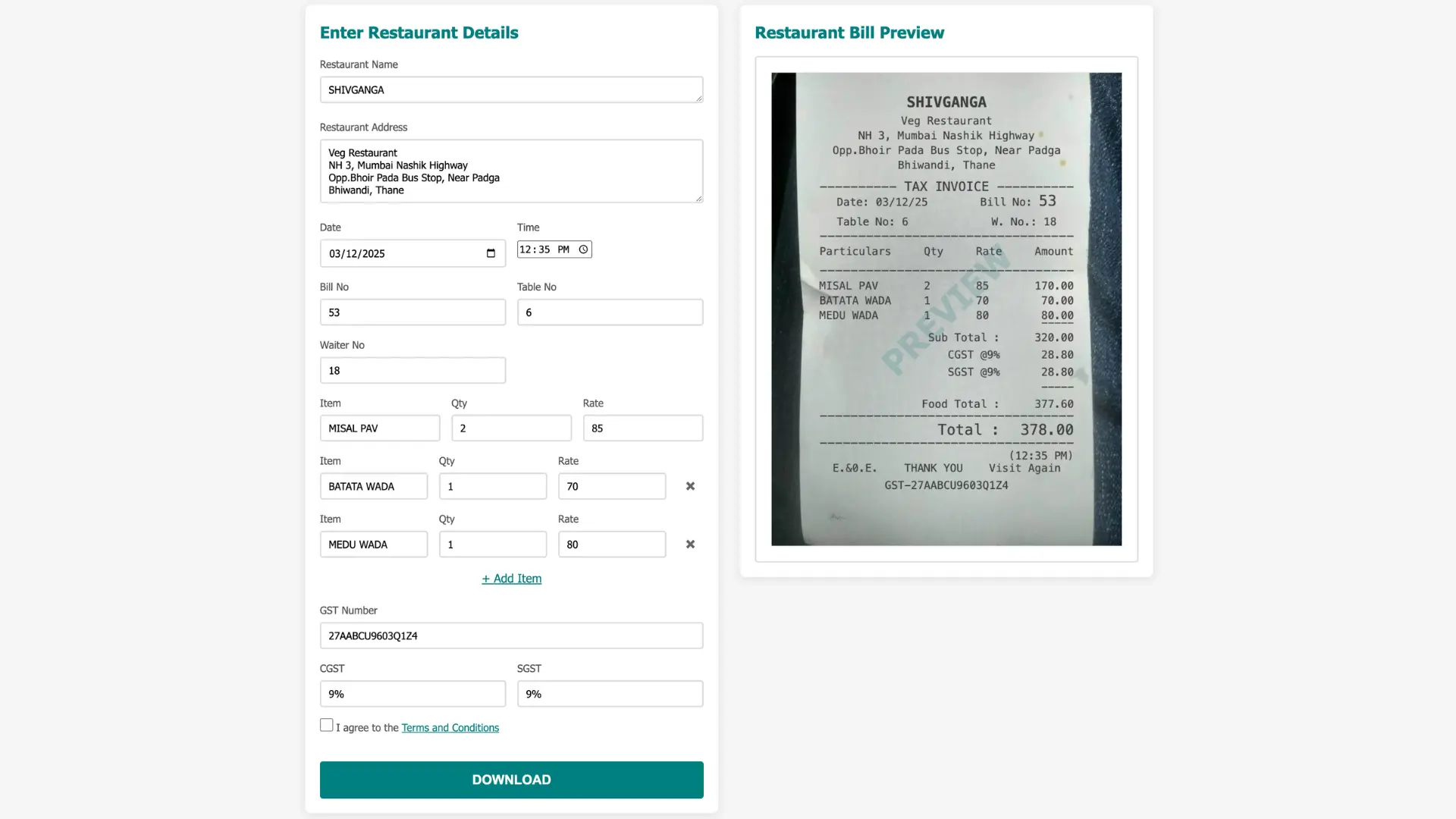
AI systems automatically generate accurate invoices from order data, calculate taxes, apply discounts, and handle complex billing scenarios.
Features:
- Automatic calculation of prices, taxes, and fees
- GST/tax compliance and reporting
- Multi-format invoice generation (PDF, email, print)
- Discount and promotional code application
- Loyalty program integration
4.2 Error Detection and Prevention
AI systems identify billing errors, discrepancies, and anomalies before invoices are sent, ensuring accuracy and reducing disputes.
Error types detected:
- Pricing discrepancies
- Tax calculation errors
- Duplicate charges
- Missing items or charges
- Discount application mistakes
4.3 Payment Processing and Fraud Detection
AI-powered payment systems process transactions securely, detect fraudulent activity, and manage multiple payment methods seamlessly.
Capabilities:
- Multi-payment method support (cards, digital wallets, QR codes)
- Real-time fraud detection
- Transaction verification and validation
- Automated reconciliation
- Refund processing automation
4.4 Financial Analytics and Reporting
AI analyzes financial data to provide insights into revenue trends, cost patterns, profitability by item, and opportunities for improvement.
Financial insights provided:
- Revenue forecasting
- Profitability analysis by menu item
- Cost trend identification
- Cash flow predictions
- Tax compliance reporting
5. Integrating AI Solutions
Successfully integrating AI solutions requires careful planning, vendor selection, staff training, and gradual implementation. Here's how to approach AI integration:
5.1 Assessment and Planning
Start by assessing your current operations, identifying pain points, and determining which AI solutions would provide the most value.
Assessment questions:
- What processes take the most time or have the highest error rates?
- Where are costs highest (labor, inventory, waste)?
- What would improve customer experience most?
- What data do you already collect that could feed AI systems?
- What is your budget for AI implementation?
5.2 Vendor Selection
Choose AI vendors that offer reliable solutions, good support, integration capabilities, and scalability for future growth.
Selection criteria:
- Proven track record and customer references
- Compatibility with existing systems
- Ease of use and training requirements
- Pricing structure and total cost of ownership
- Support and maintenance availability
5.3 Implementation Strategy
Implement AI solutions gradually, starting with pilot programs in one area before expanding to others.
Implementation steps:
- Start with one AI solution (e.g., billing or inventory)
- Test with a small group or during off-peak hours
- Gather feedback and adjust
- Train staff on new systems
- Gradually expand to full implementation
- Add additional AI solutions as experience grows
5.4 Staff Training and Change Management
Proper training and change management are critical for successful AI adoption. Ensure staff understand how AI tools work and how they benefit their work.
Training approach:
- Provide comprehensive training on new systems
- Explain how AI enhances rather than replaces their work
- Offer ongoing support and troubleshooting
- Encourage feedback and suggestions
- Recognize and reward successful adoption
6. Challenges and Considerations
While AI offers significant benefits, restaurants must also consider challenges and implementation considerations.
6.1 Initial Investment Costs
AI solutions require initial investment in software, hardware, training, and integration. However, ROI typically ranges from 12-18 months for most solutions.
Cost considerations:
- Software licensing or subscription fees
- Hardware requirements (kiosks, tablets, servers)
- Integration and implementation costs
- Training and change management expenses
- Ongoing maintenance and support costs
6.2 Data Quality and Availability
AI systems require quality data to function effectively. Ensure you have clean, accurate, and sufficient data for AI training and operation.
Data requirements:
- Historical sales and order data
- Inventory and supplier information
- Customer data and preferences
- Staff schedules and performance data
- Financial and billing records
6.3 Technology Dependencies
AI systems depend on reliable internet connectivity, hardware, and integration with existing systems. Ensure robust infrastructure and backup plans.
6.4 Staff Concerns and Adoption
Some staff may be concerned about job security or find new systems difficult to learn. Address concerns transparently and provide adequate training.
7. The Future of AI in Restaurants
AI technology continues to evolve rapidly. Here are emerging trends and future possibilities:
7.1 Emerging Technologies
- Computer Vision: AI that recognizes food quality, monitors kitchen safety, and tracks inventory visually
- Robotics: Automated food preparation and service robots
- Predictive Analytics: More accurate demand forecasting and trend prediction
- Personalization: Hyper-personalized dining experiences based on individual preferences
- Voice AI: More natural and conversational ordering experiences
7.2 Long-Term Impact
AI will continue reshaping the restaurant industry, creating new business models, improving efficiency, and enhancing customer experiences. Restaurants that embrace AI will have significant competitive advantages.
8. Getting Started with AI
Here's a practical roadmap for getting started with AI in your restaurant:
8.1 Start Small
Begin with one AI solution that addresses your biggest pain point. This could be automated billing, inventory management, or an ordering chatbot.
8.2 Choose the Right Solution
Select AI solutions that integrate well with your existing systems, are easy to use, and provide clear ROI. Consider cloud-based solutions for easier implementation.
8.3 Budget Considerations
AI solutions vary widely in cost. Simple chatbots or billing automation can start at ₹5,000-₹20,000 per month, while comprehensive systems can cost ₹50,000-₹2,00,000+ per month. Many vendors offer tiered pricing based on restaurant size and features.
8.4 Timeline
Simple AI solutions (like billing automation or chatbots) can be implemented in 2-4 weeks. More complex systems (inventory management, predictive staffing) typically take 2-3 months for full implementation and optimization.
Frequently Asked Questions
Q: How expensive is AI for small restaurants?
A: AI solutions range from affordable to enterprise-level. Small restaurants can start with simple AI tools like chatbots (₹5,000-₹15,000/month) or billing automation (₹10,000-₹25,000/month). Many vendors offer basic plans designed for smaller operations. Focus on solutions that provide the best ROI for your specific needs.
Q: Will AI replace restaurant staff?
A: AI is designed to augment, not replace, human staff. It handles repetitive tasks (order taking, scheduling, billing calculations) so staff can focus on customer service, food quality, and creating memorable experiences. AI typically reduces labor needs by 10-20%, but most of this comes from natural attrition and reduced turnover.
Q: How long does it take to implement AI solutions?
A: Implementation time varies by solution. Simple tools like AI chatbots or billing automation can be live in 2-4 weeks. More complex systems like inventory management or predictive staffing typically take 2-3 months, including data integration, training, and optimization. Start with one solution and expand gradually.
Q: Do I need technical expertise to use AI in my restaurant?
A: Modern AI solutions are designed to be user-friendly and don't require technical expertise. Vendors provide training, support, and intuitive interfaces. However, you'll need someone (could be you or a manager) to oversee implementation, monitor performance, and ensure proper usage. Most AI systems can be managed through simple dashboards.
Q: What data do AI systems need to function effectively?
A: AI systems need relevant operational data. For ordering AI: order history and customer preferences. For inventory AI: sales data, inventory levels, supplier information. For staffing AI: sales patterns, employee schedules, performance data. For billing AI: menu prices, tax rates, order data. Most AI systems work with data you already collect through POS systems.
Q: Can AI work with my existing POS or restaurant management system?
A: Most modern AI solutions integrate with popular POS systems and restaurant management platforms through APIs. Check with AI vendors about compatibility with your specific systems. Cloud-based AI solutions typically offer better integration capabilities than legacy systems. Some vendors provide custom integration services.
Q: What's the ROI for AI in restaurants?
A: ROI varies by solution and restaurant, but typical results include: 20-30% reduction in food waste (inventory AI), 10-15% reduction in labor costs (staffing AI), 30-40% faster order processing (ordering AI), 90% reduction in billing errors (billing AI). Most restaurants see ROI within 12-18 months. Start with solutions that address your biggest cost centers.
Q: Are there risks to using AI in restaurants?
A: Like any technology, AI has risks: dependence on technology (internet connectivity issues), data privacy concerns (ensure compliance with data protection laws), initial costs and ROI timeline, staff adoption challenges. However, these risks are manageable with proper planning, vendor selection, and gradual implementation. The benefits typically far outweigh the risks.
Conclusion
Artificial intelligence is transforming the restaurant industry in 2026, offering unprecedented opportunities to improve efficiency, reduce costs, and enhance customer experiences. AI-powered solutions for ordering, inventory management, staffing, and billing are becoming essential tools for competitive restaurants.
Key takeaways:
- AI is Here to Stay: Restaurants that adopt AI gain significant competitive advantages
- Start Small: Begin with one AI solution that addresses your biggest pain point
- Focus on ROI: Choose solutions that provide clear, measurable benefits
- Train Your Team: Successful AI adoption requires staff buy-in and training
- Integrate Gradually: Implement AI solutions step-by-step, not all at once
- Measure Results: Track metrics to understand AI impact and optimize usage
The future of restaurants is intelligent, efficient, and customer-focused. AI technology is making this future possible today. Whether you start with automated billing, AI-powered ordering, intelligent inventory management, or smart staffing solutions, taking the first step toward AI adoption will position your restaurant for success in an increasingly competitive industry.
In 2026, AI is not just a competitive advantage—it's becoming a necessity. Restaurants that embrace AI technology will thrive, while those that resist may struggle to keep up. The time to explore AI solutions for your restaurant is now. Start small, learn, adapt, and grow. The future of restaurants is intelligent, and that future starts today.
.webp)
.webp)
.webp)